How Do Traffic Monitoring Cameras Improve Road Safety and Traffic Management?
Can cities really reduce congestion, respond faster to incidents, and improve road safety with better visibility? In many cases, yes and one of the most practical tools behind that effort is monitoring cameras. These systems help transportation teams observe road conditions in real time, identify problems early, and support faster decisions across busy intersections, highways, parking zones, and urban corridors. Modern camera systems do much more than stream video. They can help detect congestion, monitor vehicle flow, support traffic signal coordination, identify wrong-way driving, and improve incident response. For municipalities, campuses, industrial parks, and smart city environments, traffic monitoring technology has become an important part of safer and more efficient transportation operations.
What Are Traffic Monitoring Cameras?
Traffic monitoring cameras are surveillance and observation systems used to watch roads, intersections, highways, toll lanes, parking areas, and public traffic corridors. Their primary role is to give operators real-time visual awareness of traffic conditions and support better transportation management.These systems are commonly installed in:
- City intersections
- Highway overpasses
- Toll roads and entry gates
- Parking structures
- Campus roadways
- Industrial and logistics zones
- Public transit corridors
Depending on the setup, they may record video continuously, stream live footage to a traffic control center, or connect to software that analyzes movement, congestion, and roadway events.
Why Are Traffic Monitoring Cameras Important?
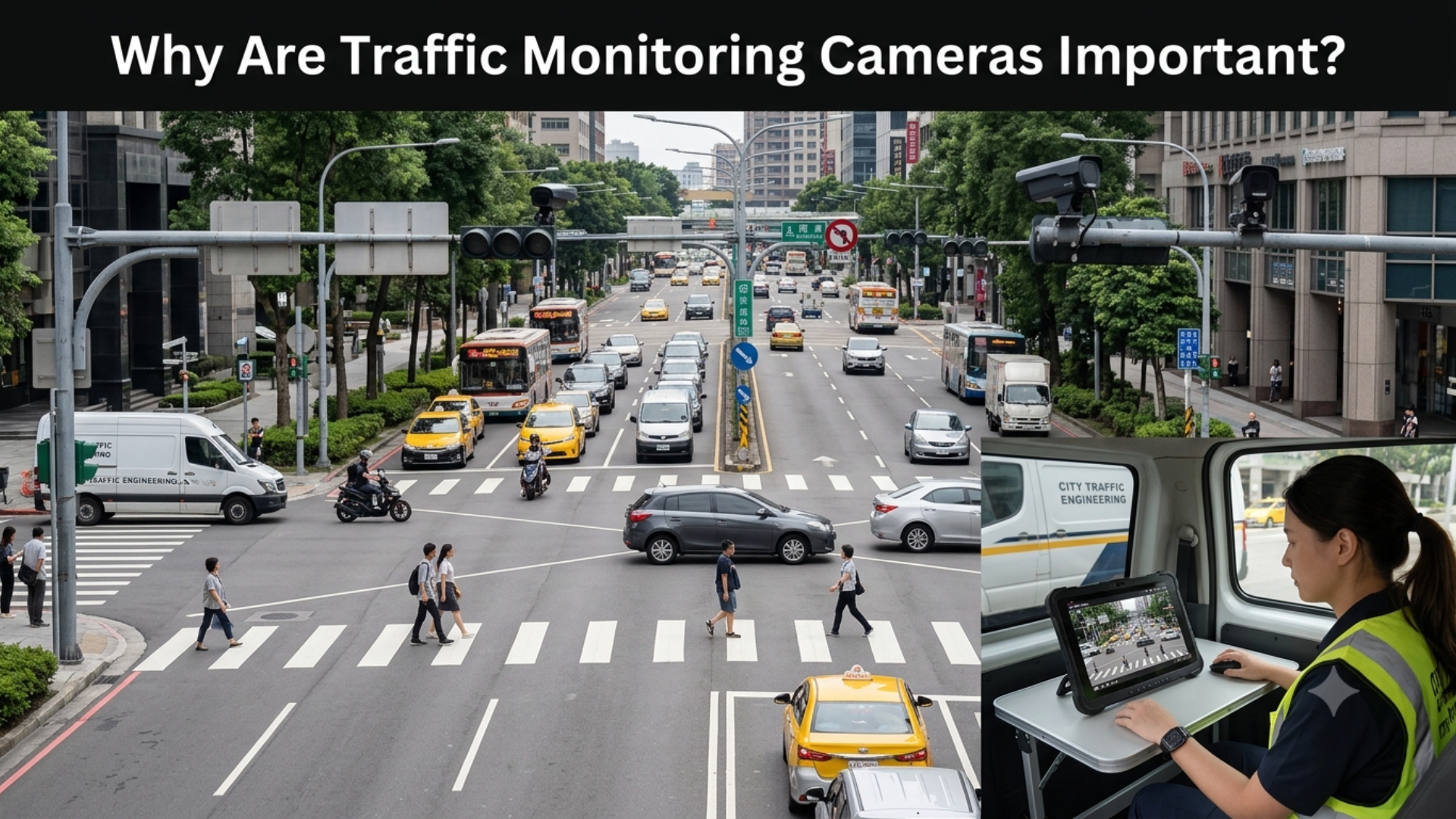
Road networks are dynamic. Traffic volume changes by the minute, incidents can happen without warning, and even small disruptions can quickly create larger delays. Cameras help operators understand what is happening on the ground without relying only on driver reports or sensor data.Here is why they matter:
- They improve visibility across busy road networks
- They help detect congestion or bottlenecks quickly
- They support faster incident verification
- They help traffic teams coordinate signals and lane control
- They provide evidence for event review and planning
- They improve oversight in areas with high pedestrian or vehicle activity
In short, cameras make traffic systems easier to monitor, manage, and improve.
Key Features to Look For in a Traffic Monitoring Camera System
Not every camera system is designed for the same road environment. The right solution depends on whether the goal is urban traffic management, highway visibility, parking control, toll monitoring, or smart-city analytics.Important features include:
High-Resolution Video
Clear video helps operators verify incidents, assess traffic conditions, and identify vehicles or hazards more accurately.
Low-Light and Weather Performance
Outdoor traffic cameras must perform reliably at night and in changing weather conditions.
Wide-Area Coverage
Intersections, highways, and road corridors often require cameras with broad fields of view or PTZ functionality.
Real-Time Streaming
Live visibility is essential for traffic operations centers and active roadway management.
Analytics and Event Detection
Some platforms can identify stopped vehicles, congestion buildup, lane violations, or unusual traffic patterns automatically.
Integration with Control Systems
Modern systems often work alongside traffic management solutions such as signal control software, command-center dashboards, digital signage, and roadway sensors.
How Traffic Monitoring Cameras Support Safer Roads
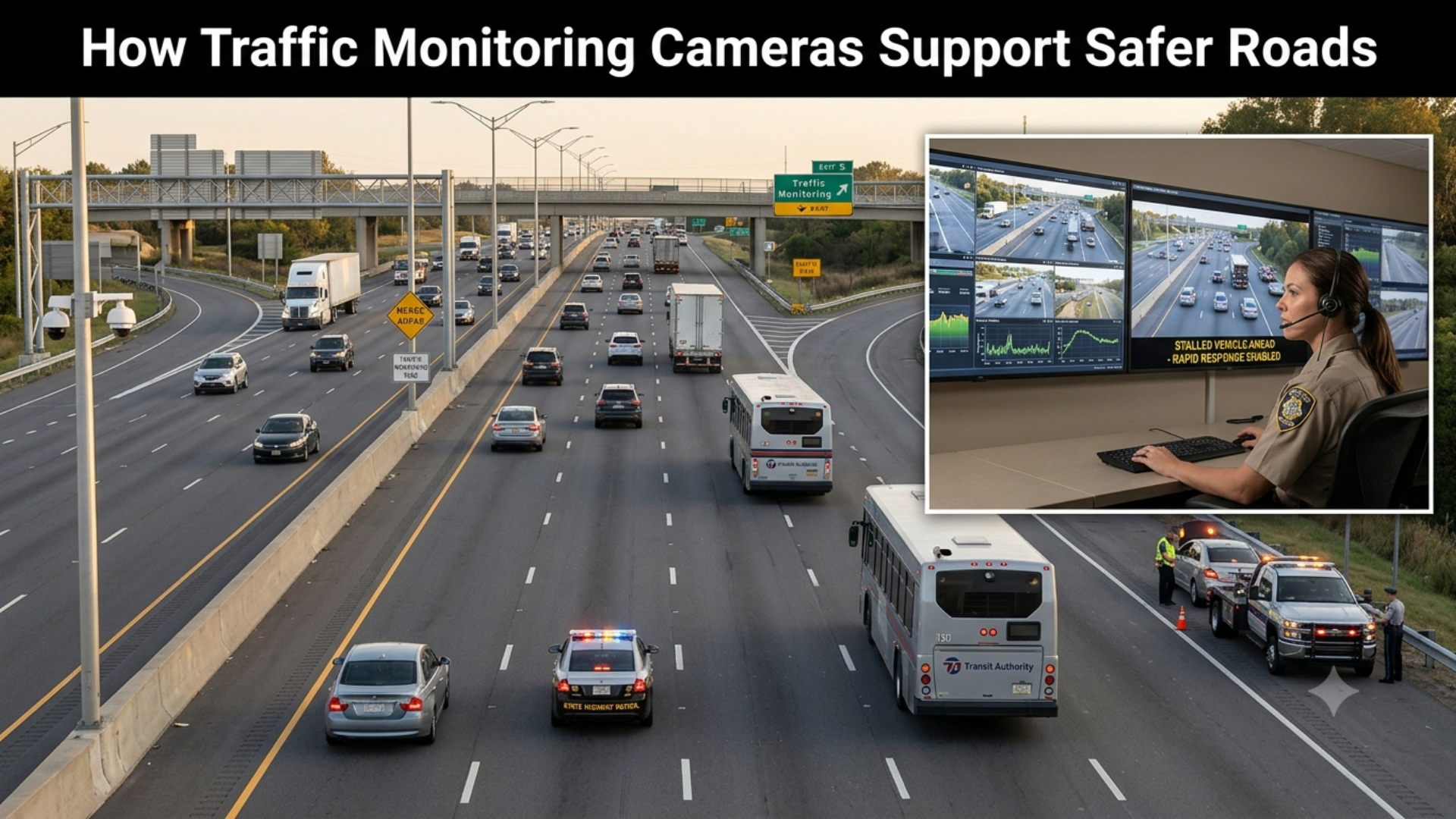
One of the biggest benefits of camera-based traffic systems is their role in improving road safety. While cameras do not replace enforcement or engineering upgrades, they help teams spot risks faster and respond more effectively.
Real-Time Incident Detection
Operators can identify crashes, stalled vehicles, lane blockages, or unsafe driver behavior as soon as it appears on camera feeds.
Congestion Awareness
Live traffic visibility helps teams see where traffic is building up and whether intervention is needed to reduce backups.
Intersection Monitoring
Busy intersections can be monitored for signal issues, blocked lanes, red-light conflicts, and pedestrian safety concerns.
Weather and Visibility Support
Cameras help transportation teams assess road conditions during fog, heavy rain, storms, or low-visibility events.
Emergency Response Coordination
When an incident occurs, camera footage helps responders understand the location, scale, and urgency of the problem before they arrive.
Where Traffic Monitoring Cameras Are Commonly Used
Traffic monitoring is no longer limited to major highways. Cameras are used in a wide range of transportation and mobility environments.
Urban Intersections
Cities use cameras to observe traffic flow, manage congestion, and improve signal timing in busy areas.
Highways and Expressways
Transportation departments monitor accidents, stalled vehicles, and travel conditions across longer road corridors.
Parking Facilities and Entry Points
Cameras help monitor vehicle movement, entry lanes, exit congestion, and occupancy conditions.
School Zones and Campuses
Cameras can improve visibility around drop-off zones, crosswalks, and pedestrian-heavy road segments.
Industrial and Logistics Areas
Warehouses, ports, and distribution hubs use traffic monitoring to manage truck flow, loading access, and internal road safety.
Beyond Monitoring: The Role of Analytics and Identification
Traffic camera systems are becoming smarter. In addition to showing live video, many platforms now use analytics to improve how operators understand and manage roadway activity.For example, some systems can:
- Count vehicles and estimate traffic density
- Detect stopped vehicles or wrong-way movement
- Identify queue buildup at intersections
- Support travel-time estimation
- Track recurring congestion trends over time
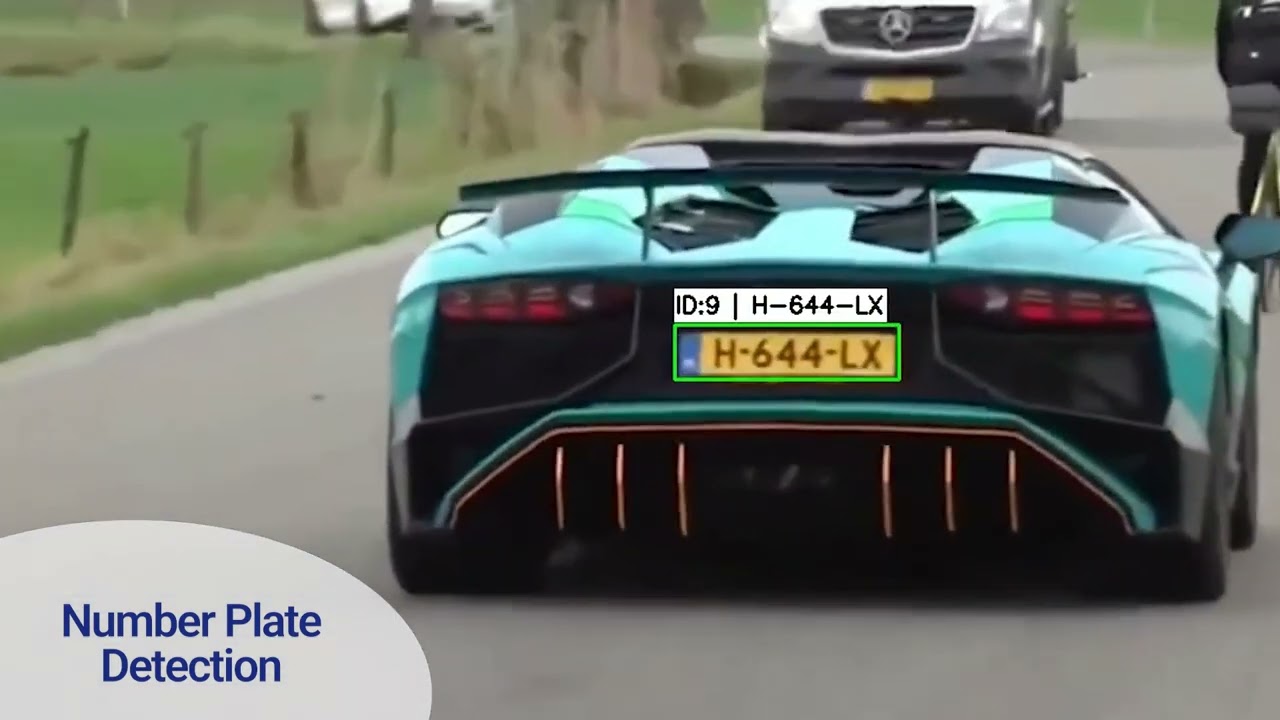
In more advanced deployments, an LPR camera may be used to read license plates at toll lanes, parking facilities, gated entries, or restricted access roads. These tools can support vehicle identification, access control, and traffic event investigation when used within appropriate legal and privacy frameworks.
Challenges to Consider Before Deployment
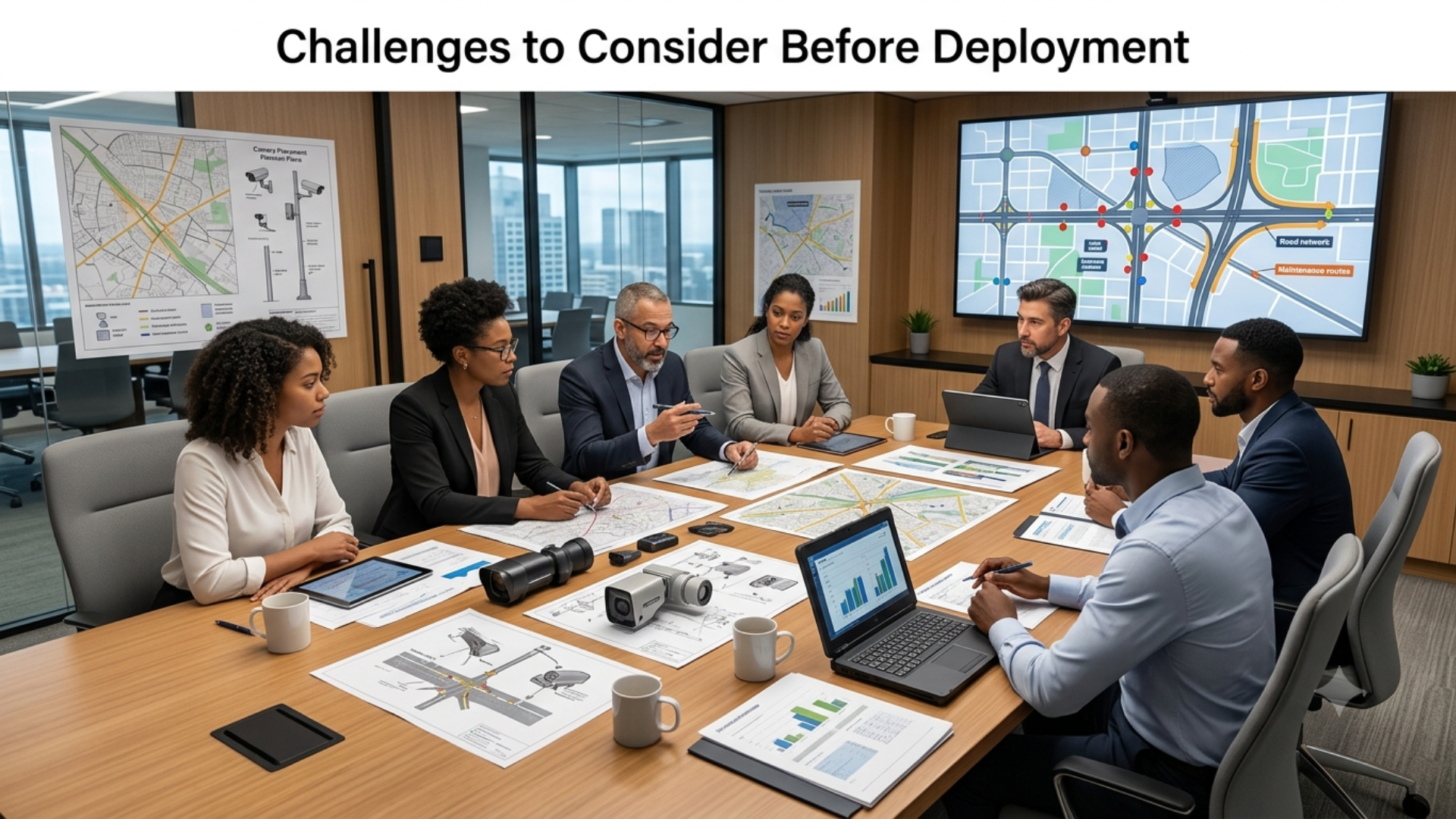
Traffic monitoring systems offer clear benefits, but implementation still requires planning.
Installation and Infrastructure
Outdoor cameras may require poles, power, networking, mounting hardware, and weather protection.
Data Management
Continuous video creates storage and bandwidth demands, especially across large road networks.
Maintenance Needs
Cameras installed outdoors must be cleaned, inspected, and protected against environmental wear.
Privacy and Compliance
Traffic systems must be deployed in ways that align with local laws, public transparency expectations, and data handling policies.
System Integration
To get the most value, cameras often need to work with control-room software, alert systems, and existing transportation infrastructure.
How to Choose the Right Traffic Monitoring Camera Setup
Before selecting a system, it helps to define the purpose clearly. Ask questions such as:
- Is the priority congestion monitoring, safety oversight, access control, or incident response?
- Will the cameras cover intersections, highways, parking areas, or mixed environments?
- Is live monitoring required, or is recorded footage enough?
- Do you need analytics, vehicle counting, or plate recognition features?
- How will footage be stored and who will review it?
- Will the system integrate with broader traffic operations tools?
The right setup should match the road environment, traffic volume, and operational goals.
You can also watch: AI-Powered Automatic Number Plate Recognition | VideoraIQ
Summary
Traffic monitoring cameras help cities, campuses, and transportation teams improve visibility, reduce response time, and manage road activity more effectively. From congestion monitoring to incident verification and smarter traffic planning, these systems play a valuable role in modern road safety and traffic management.
FAQ
What do traffic monitoring cameras do?
They provide live or recorded video of roads, intersections, and traffic corridors to help monitor traffic flow, verify incidents, and improve roadway management.
Are traffic monitoring cameras only used by cities?
No. They are also used by campuses, logistics facilities, industrial sites, parking operators, and private road networks.
Can traffic monitoring cameras reduce congestion?
They can help traffic teams identify congestion early and respond with signal changes, lane management, or incident response measures.
What is the difference between a traffic camera and an LPR camera?
A traffic camera focuses on monitoring road conditions and vehicle movement, while an LPR camera is designed to capture and read license plate information.
Do traffic monitoring cameras use AI?
Some modern systems do. AI features may help detect congestion, count vehicles, identify unusual movement, or flag roadway incidents automatically.
