Can Commercial Surveillance Systems Improve Business Security and Operational Visibility?
How can businesses protect their people, assets, and operations while also improving day-to-day visibility? The answer often starts with surveillance systems. These systems do much more than record video. When chosen and deployed correctly, they help organizations monitor facilities, reduce risks, support investigations, and gain valuable insight into what is happening across their commercial spaces.From retail stores and offices to warehouses, hospitals, and campuses, modern surveillance systems are now part of broader security and operational strategies. They help businesses respond faster to incidents, deter unwanted activity, and maintain better awareness across multiple locations.
What Are Commercial Surveillance Systems?
Commercial surveillance systems are video-based monitoring solutions designed for business environments. They typically include cameras, recording devices, storage systems, viewing software, and in many cases, advanced analytics features.Unlike basic consumer setups, business surveillance systems are built for larger spaces, multiple users, longer retention, and stronger integration with other security tools. A commercial setup may include:
- Indoor and outdoor cameras
- Network video recorders or cloud storage
- Live monitoring dashboards
- Motion detection and alerting
- Access control integrations
- Mobile and remote viewing capabilities
- Searchable event history
- Video analytics and reporting tools
These systems can be used for security, compliance, operational monitoring, and business continuity.
Key Features to Look For in a Commercial Surveillance System
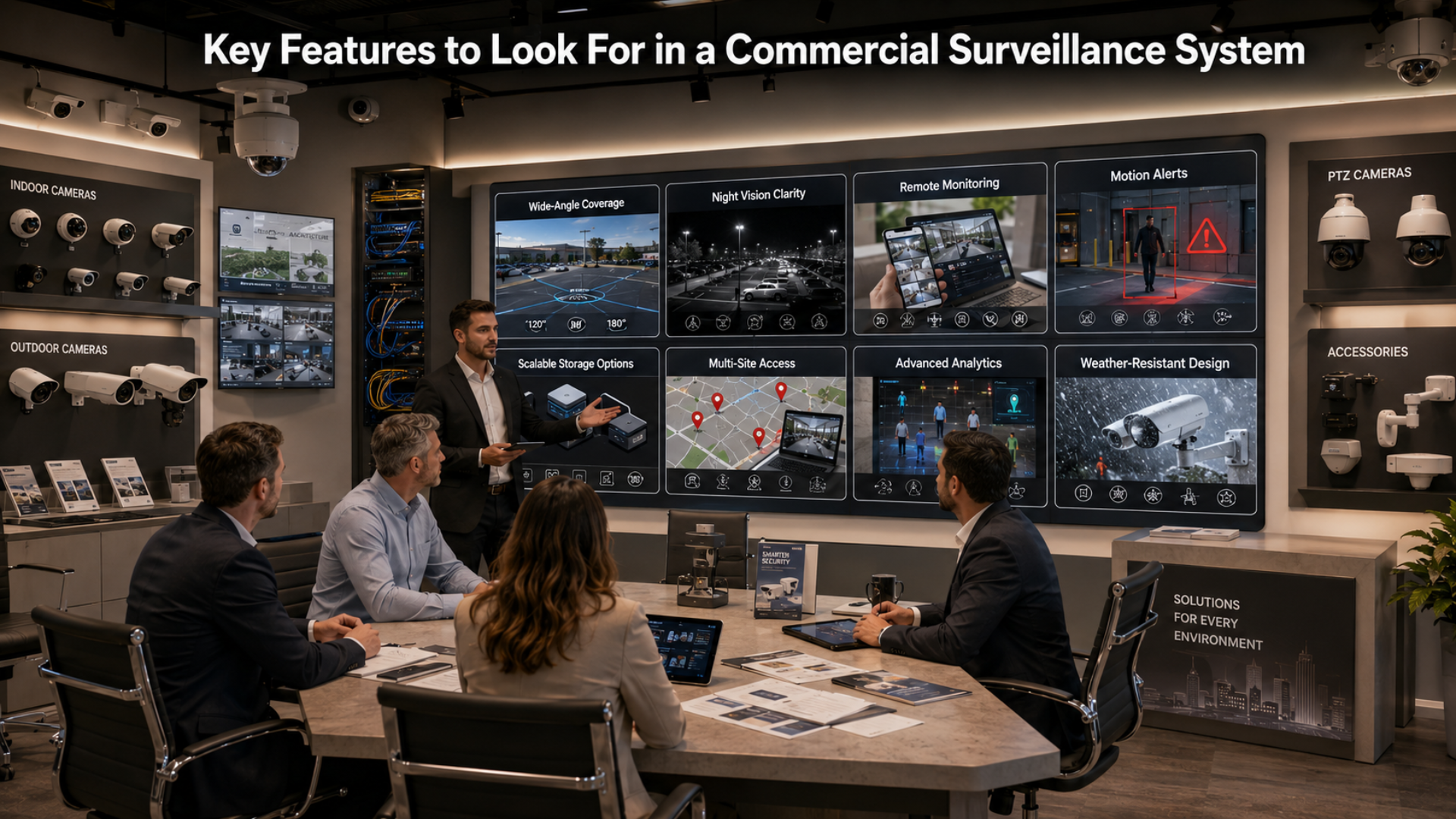
Not all systems are built the same. The right solution depends on the size of your business, the type of environment you manage, and what you want the system to achieve.
High-Resolution Video
Clear footage is essential for identifying incidents, people, and activity. Higher-resolution cameras provide better detail, especially in large or high-traffic environments.
Remote Access
Business owners and security teams often need to monitor locations from anywhere. Mobile apps and cloud dashboards make this possible.
Motion and Event Alerts
Real-time notifications help teams respond quickly when something unusual happens, such as after-hours movement or unauthorized entry.
Night Vision and Low-Light Performance
Commercial spaces are not always brightly lit, especially at night. Strong low-light performance improves visibility when it matters most.
Video Storage Options
Businesses should consider whether they want on-site recording, cloud storage, or a hybrid model. Retention needs vary by industry and compliance requirements.
Analytics and Smart Search
Modern systems may include people counting, object detection, line crossing alerts, occupancy tracking, and event-based video search. These features save time and improve system value.
Why Businesses Invest in Surveillance Systems
Businesses install surveillance systems for several reasons, and security is only one of them. Modern organizations want more visibility into their environments, especially when they manage multiple teams, locations, or high-value assets.Common business goals include:
- Preventing theft and vandalism
- Monitoring entrances, exits, and restricted areas
- Supporting employee and visitor safety
- Investigating incidents with reliable footage
- Tracking operational activity across facilities
- Improving accountability and compliance
- Strengthening after-hours monitoring
In many organizations, surveillance also supports broader enterprise IT security and physical security planning, especially where access control, cybersecurity, and facility monitoring need to work together.
Where Commercial Surveillance Systems Are Used
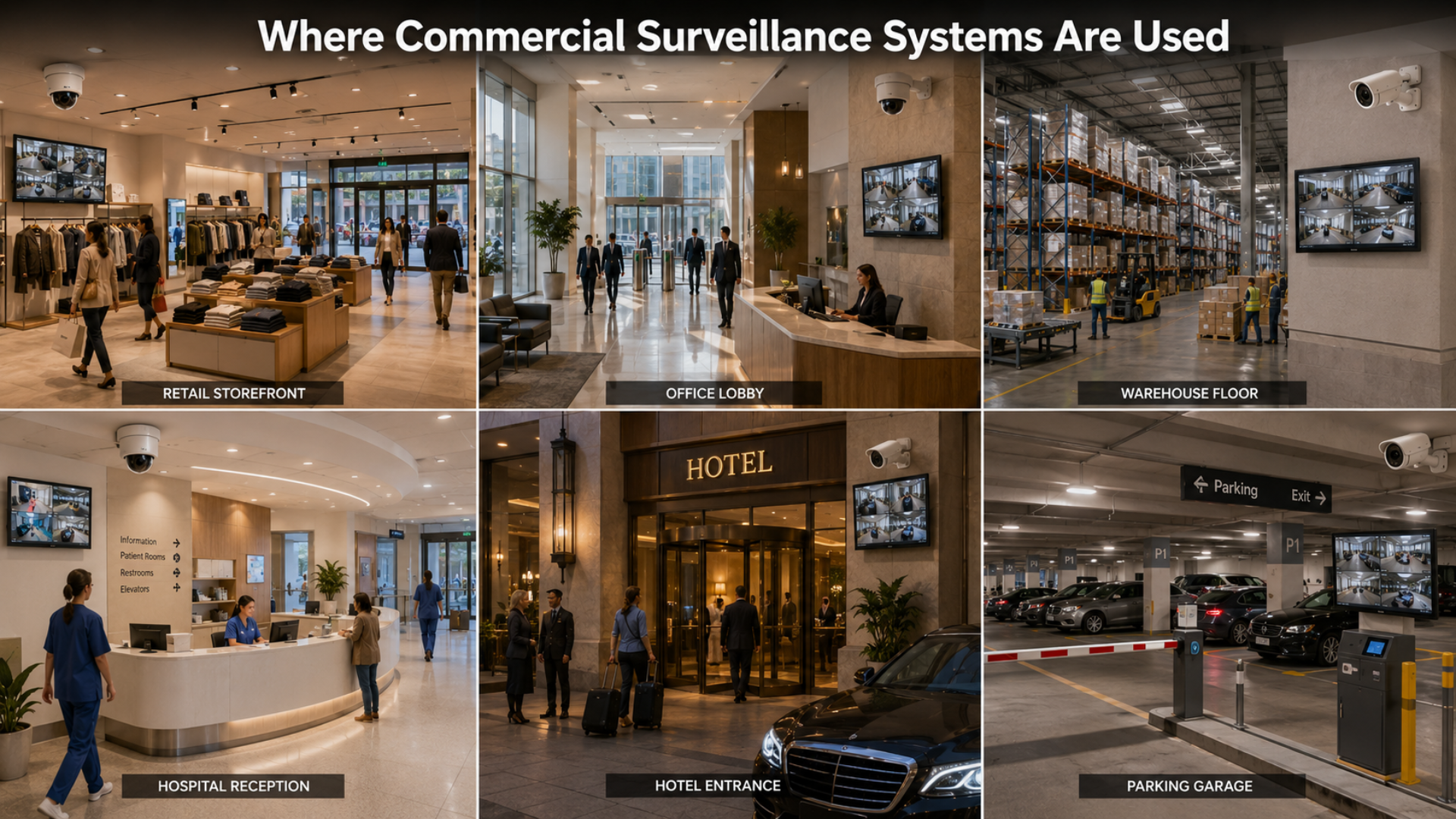
Commercial surveillance systems are now used across a wide range of industries and facility types.
Retail Stores
Retailers use surveillance to deter theft, monitor customer activity, review incidents, and improve awareness on the sales floor.
Office Buildings
Businesses monitor lobbies, meeting areas, parking lots, server rooms, and employee-only spaces to improve safety and access oversight.
Warehouses and Distribution Centers
These environments benefit from inventory protection, dock monitoring, employee safety visibility, and after-hours surveillance.
Healthcare Facilities
Hospitals and clinics use surveillance for access monitoring, patient-area oversight, and general facility security.
Schools and Campuses
Educational environments use surveillance to monitor entrances, common areas, and large facilities while supporting safety response plans.
Benefits Beyond Basic Security
The biggest shift in business surveillance is that it now supports operations as well as protection. Businesses are using video data to improve decision-making, not just capture incidents.Some operational benefits include:
- Monitoring workflow in high-traffic areas
- Reviewing service delays or bottlenecks
- Understanding customer flow patterns
- Supporting staffing decisions
- Checking compliance with internal procedures
- Improving visibility across multiple sites
This is why many businesses view surveillance as part of a broader investment in commercial security systems rather than a standalone camera purchase.
Common Challenges to Consider
Even the best surveillance system requires thoughtful planning. Before investing, businesses should consider several practical challenges.
Camera Placement
Poor positioning can create blind spots or reduce image quality. A system is only as effective as its coverage.
Storage Costs
High-resolution footage and long retention periods can increase storage needs significantly.
Privacy and Compliance
Businesses must balance monitoring needs with employee privacy, customer trust, and any relevant legal requirements.
Integration Complexity
Some organizations need surveillance to connect with access control, alarms, visitor systems, or analytics platforms. Compatibility matters.
Ongoing Management
Surveillance systems require updates, maintenance, user permissions, and periodic review to remain effective over time.
How to Choose the Right System for Your Business
When comparing surveillance solutions, focus on business needs first. Ask the following questions:
- What areas need monitoring and why?
- How many locations will the system cover?
- Do you need real-time alerts or just recorded footage?
- How long must video be stored?
- Will the system need to integrate with other security tools?
- Do you want analytics features for operations as well as security?
The best system is one that matches your environment, risk level, and management capacity, not simply the one with the longest feature list.
You can also watch: VideoraIQ Cashier Absence Detection | Real-Time AI Monitoring for Retail
Summary
Commercial surveillance systems help businesses improve security, monitor facilities, investigate incidents, and gain operational visibility. From retail stores to warehouses and office buildings, the right system can support safety, reduce risk, and provide a stronger view of what is happening across your commercial environment.
FAQ
What are commercial surveillance systems used for?
They are used to monitor business environments for security, incident review, access oversight, theft prevention, and operational visibility.
Can commercial surveillance systems improve operations too?
Yes. Many businesses use surveillance to monitor workflows, customer flow, service areas, and compliance with internal procedures.
Are commercial systems different from home security cameras?
Yes. Commercial systems are designed for larger spaces, multiple users, stronger storage needs, and business-level integrations.
Do businesses need cloud storage for surveillance?
Not always. Some use local recorders, some use cloud storage, and others choose a hybrid setup depending on budget and retention needs.
What should I prioritize when choosing a surveillance system?
Start with camera coverage, video quality, storage, remote access, alerting, and whether the system supports your operational and security goals.