How Can Cameras Security Solutions Improve Everyday Protection and Visibility?
How do you keep a closer eye on your home, office, or property without being physically present all the time? That’s where camera security solutions come in. From entry monitoring and indoor visibility to incident review and remote access, modern camera systems help people improve safety, reduce uncertainty, and stay informed about what is happening in important spaces.Today’s security cameras are no longer limited to basic recording. They can send alerts, support live monitoring, improve coverage across multiple areas, and help users review footage quickly when something unexpected happens. Whether you are protecting a home, a small office, a retail store, or a larger commercial property, the right camera setup can make everyday security more practical and effective.
What Are Cameras Security Systems?
Cameras security systems are video monitoring setups designed to observe, record, and help protect homes, businesses, and other properties. They may include one camera or a complete network of indoor and outdoor devices connected to storage, apps, or monitoring platforms.A typical system may include:
- Indoor cameras for rooms, hallways, or workspaces
- Outdoor cameras for entrances, driveways, parking areas, or perimeters
- Mobile app access for live viewing and playback
- Motion alerts or event notifications
- Cloud or local video storage
- Night vision, audio, or smart detection features
The purpose of these systems is simple: improve visibility and help users respond more quickly to security concerns, suspicious activity, or day-to-day monitoring needs.
Key Benefits of Modern Camera Security Systems
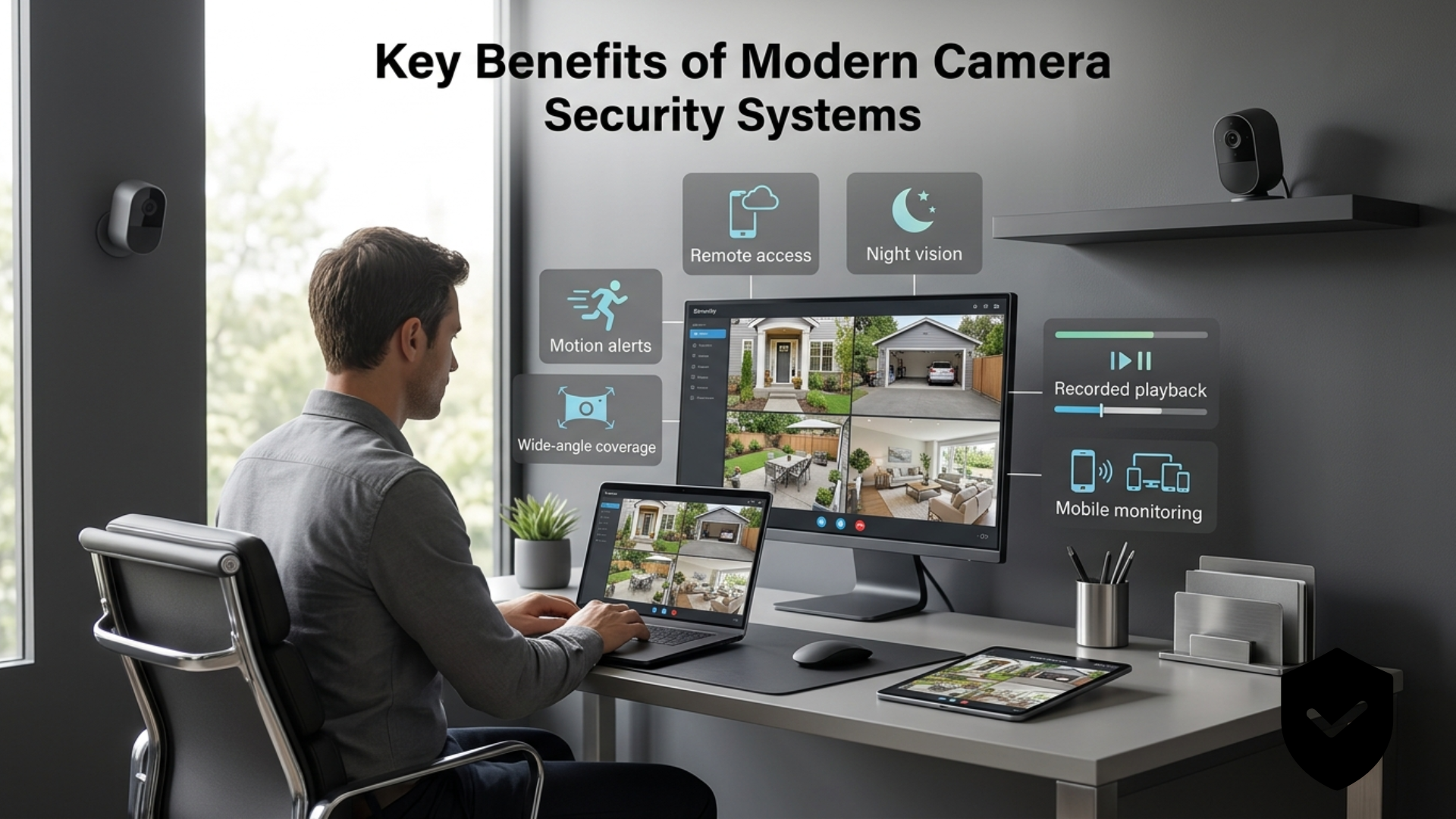
Modern systems offer several practical advantages beyond simple surveillance.
1. Real-Time Visibility
Live camera access lets users check important areas anytime from a phone, tablet, or computer. This can be useful for both urgent events and routine monitoring.
2. Recorded Evidence
Footage can help verify incidents, review suspicious activity, or provide documentation for insurance, internal investigations, or law enforcement.
3. Faster Response to Events
When systems include motion alerts or event notifications, users can act more quickly if something unusual occurs.
4. Broader Property Oversight
Cameras make it easier to monitor multiple rooms, entrances, hallways, outdoor areas, or commercial zones without being everywhere at once.
5. Greater Peace of Mind
Knowing that important spaces are visible and recorded can reduce uncertainty and help users feel more in control of their environment.
Why Security Cameras Matter in Homes and Businesses
Surveillance cameras can do much more than capture video. It helps create awareness. That awareness can be useful for security, operations, accountability, and peace of mind.
For homes, cameras can help with:
- Monitoring entrances and deliveries
- Checking on children, pets, or elderly family members
- Reviewing unexpected activity around the property
- Improving visibility when no one is home
For businesses, cameras can help with:
- Monitoring visitors and entry points
- Protecting assets and inventory
- Supporting employee and customer safety
- Reviewing incidents, disputes, or after-hours activity
The value comes from having better information when something happens—and often before it escalates.
Where Security Cameras Are Commonly Used
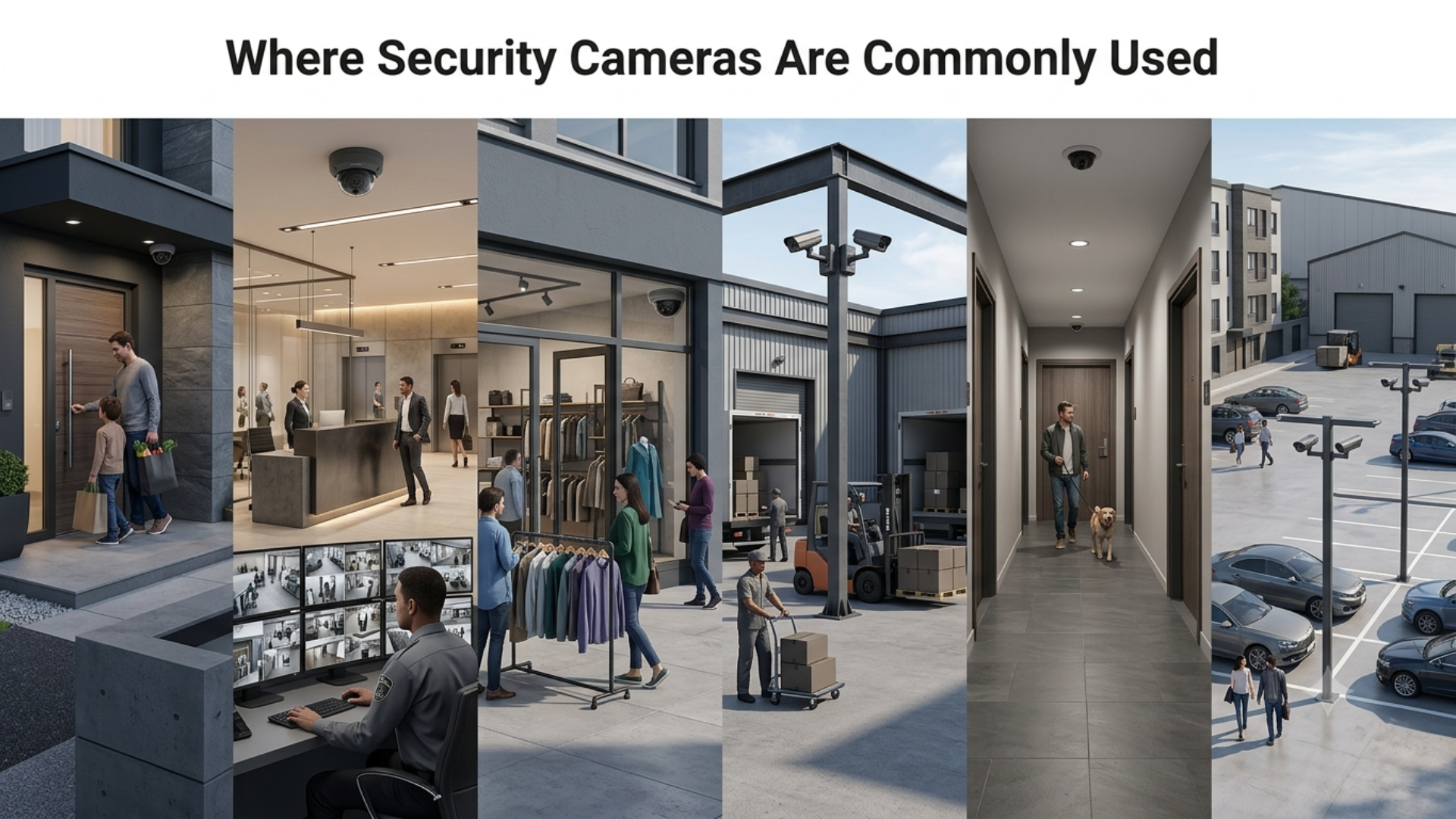
Security cameras are useful in many different environments because monitoring needs vary from one setting to another.
Residential Properties
Homes use cameras at front doors, garages, driveways, living areas, and backyards to improve visibility and reduce blind spots.
Offices and Commercial Spaces
Businesses use cameras at entrances, reception areas, work floors, hallways, and storage rooms to improve safety and oversight.
Retail Stores
Retail environments use cameras to monitor customer activity, reduce theft risk, and review incidents at registers or entrances.
Warehouses and Industrial Facilities
These properties often require wider coverage across loading zones, inventory areas, gates, and staff access points.
Apartment Buildings and Shared Properties
Cameras help monitor shared entrances, parking areas, mail zones, and common spaces.
What Features Should You Look For?
The best camera setup depends on where the system will be used and what kind of visibility is needed. Still, a few features matter in almost every case.
Video Quality
Clear footage makes it easier to identify people, activity, and events. Higher resolution can improve review quality, especially in larger spaces.
Night Vision
A camera should still perform well in low-light conditions, especially outdoors or in dim indoor areas.
Motion Alerts
Notifications help users know when movement or unusual activity is detected.
Remote Viewing
Being able to check live footage from a mobile app or browser is now one of the most useful features in a camera system.
Storage Options
Some users prefer local recording, while others want cloud storage for remote access and backup protection.
Indoor Coverage
An indoor security camera can be especially useful for monitoring living areas, offices, reception spaces, stock rooms, or hallways where internal visibility matters most.
Common Challenges to Consider Before Buying
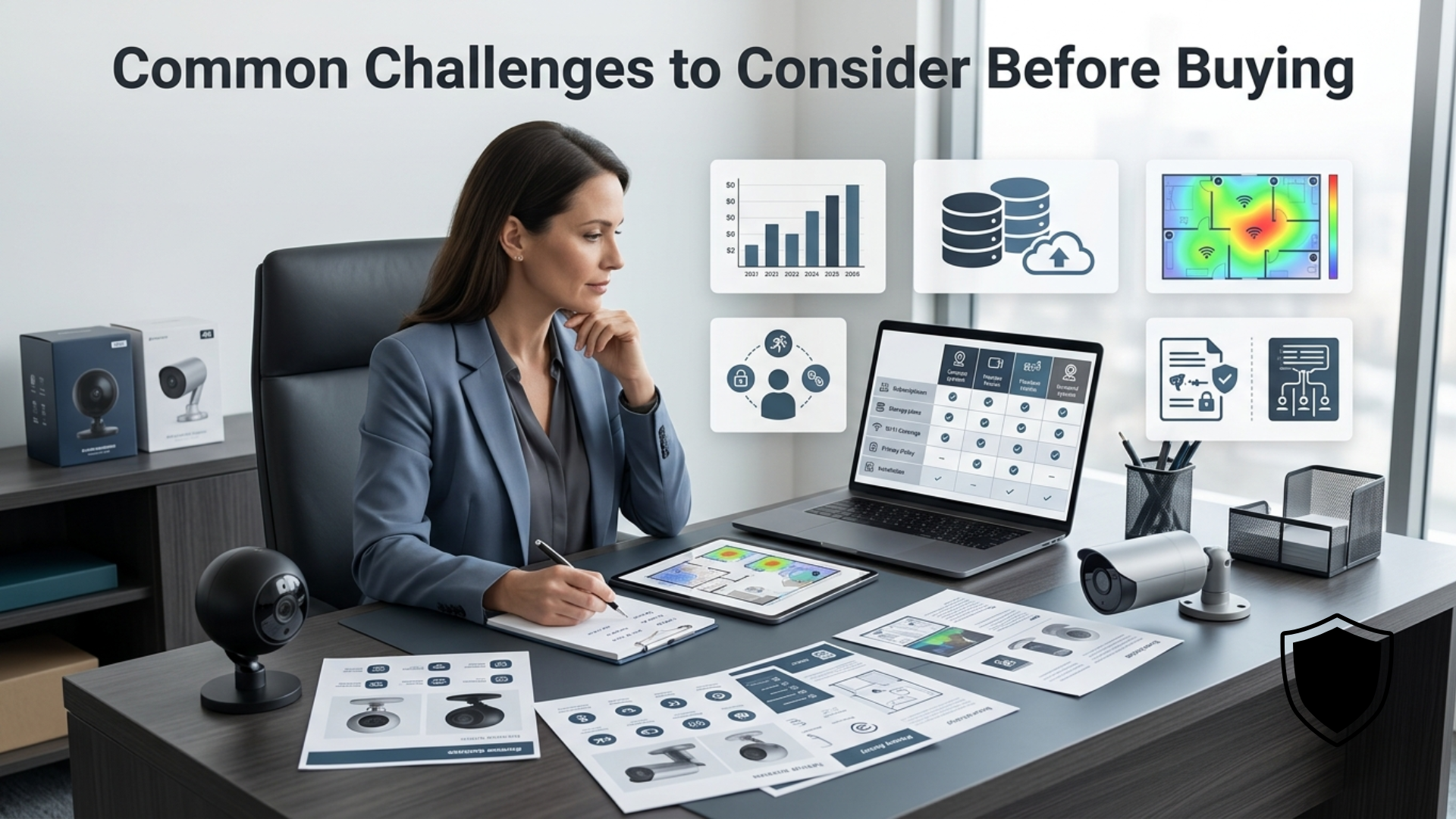
While security cameras offer clear benefits, it’s important to think through a few practical issues before choosing a system.
Placement and Coverage
Poor positioning can create blind spots or limit how useful the footage will be.
Internet and Connectivity
Wi-Fi cameras depend on stable internet performance for alerts, cloud uploads, and remote viewing.
Privacy Concerns
Cameras should be installed responsibly and in ways that respect privacy laws, workplace policies, and household expectations.
Storage Costs
Cloud subscriptions, retention periods, and extra camera licenses can affect the total cost over time.
Too Many Alerts
If motion settings are not configured properly, users may receive more notifications than necessary.
How to Choose the Right Setup
Before buying, it helps to answer a few questions:
- What areas need monitoring most?
- Do you need indoor cameras, outdoor cameras, or both?
- Is remote access important?
- Will footage be stored locally, in the cloud, or both?
- Do you need one camera or a full multi-camera system?
- Are alerts, night vision, and mobile viewing essential?
A thoughtful setup is usually better than simply buying the most expensive camera available.
Why Camera Security Is Becoming More Practical
Modern systems are easier to use than older surveillance setups. Installation is often simpler, mobile apps are more user-friendly, and features such as alerts, playback search, and remote viewing are more accessible than before. That makes camera protection useful not only for large businesses, but also for homeowners, small offices, and growing commercial spaces.Used well, security cameras solutions can help people protect what matters, respond faster to issues, and maintain better visibility without constant manual checking.
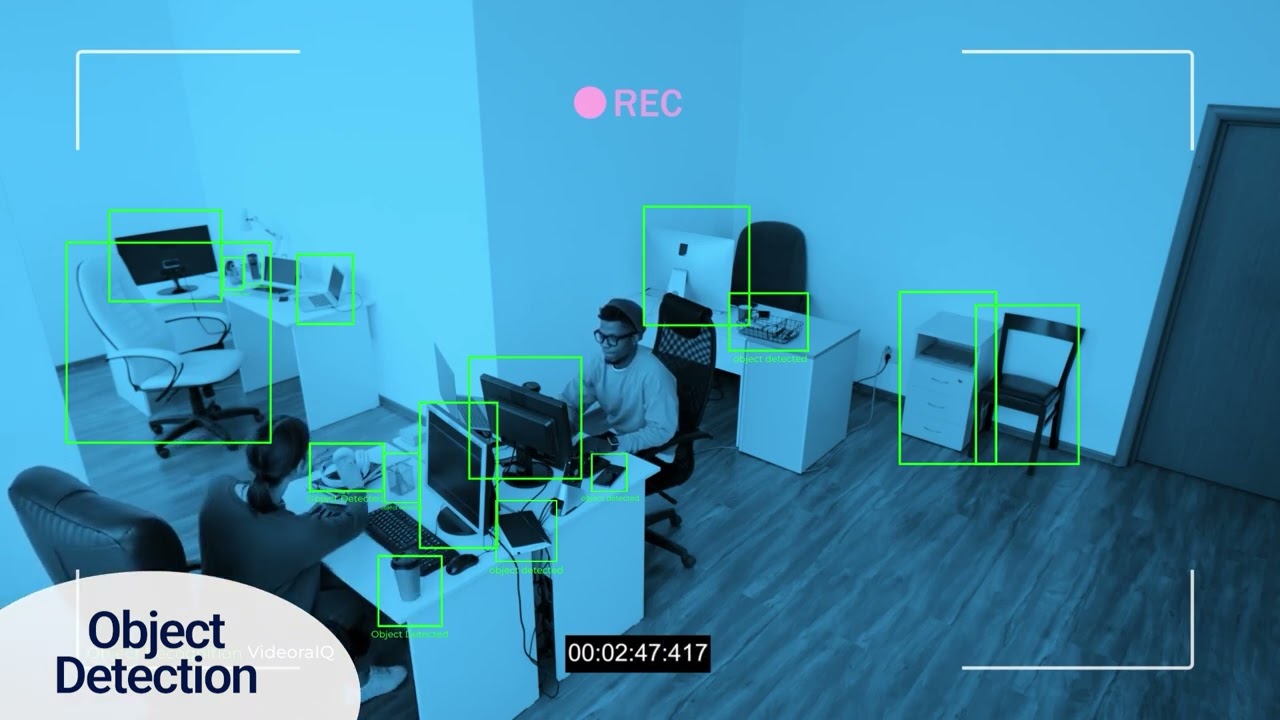
You can also watch: Real-Time AI Object Detection: Optimizing Asset Management | VideoraIQ
Summary
Cameras security helps homes and businesses improve visibility, monitor important spaces, review incidents, and strengthen everyday protection. With the right mix of coverage, video quality, alerts, and storage, a well-planned camera system can make security simpler, smarter, and more dependable.
FAQ
Are security cameras worth it for small homes or offices?
Yes. Even a small setup can improve visibility, support incident review, and provide peace of mind.
Should I choose indoor or outdoor cameras first?
That depends on your main risk areas. Many users start with entry points, driveways, front doors, or key indoor spaces.
Do security cameras always need Wi-Fi?
Not always. Some systems use wired connections or local recorders, while others rely heavily on Wi-Fi for app access and cloud storage.
Can security cameras help beyond theft prevention?
Yes. They can also help with safety monitoring, visitor oversight, package monitoring, and reviewing unexpected incidents.
What is the most important feature in a camera system?
That depends on your needs, but clear video, reliable alerts, good placement, and easy footage access are usually the most valuable features.
