ANPR Blacklist Matching: How Can License Plate Recognition Improve Vehicle Security?
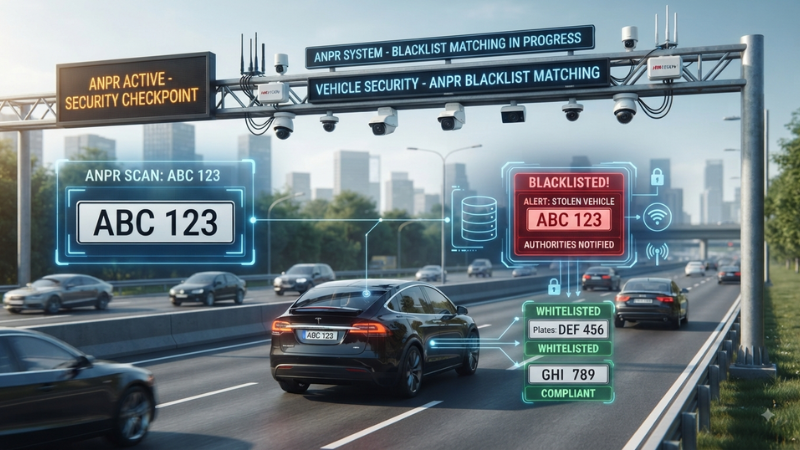
Could a security system identify a vehicle within seconds and determine whether it should receive additional attention? How can businesses, parking facilities, airports, and restricted locations monitor vehicles without requiring security staff to manually check every license plate? ANPR Blacklist Matching provides an automated way to address these challenges by using Automatic Number Plate Recognition technology to identify license plates and compare them against a predefined blacklist.In simple terms, an ANPR camera captures a vehicle's license plate, recognition software converts the characters into digital information, and the system compares the result with records stored in a database. If the plate matches a blacklisted record, the system can generate an alert so authorized personnel can investigate or follow the organization's established security procedure.
How Does ANPR Blacklist Matching Work?
The process begins when an ANPR camera detects a vehicle approaching a monitored location. The camera captures an image of the vehicle and identifies the license plate within that image. Camera positioning, image quality, lighting, vehicle speed, and plate visibility can all influence the quality of the captured information.Once the plate has been detected, optical character recognition technology analyzes the characters and converts them into machine-readable text. For example, a physical plate displaying “CG04AB1234” can be converted into a digital record that software can search and compare.The recognized plate number is then checked against a database containing vehicles that require attention. Depending on the organization's requirements, this database may contain vehicles associated with unauthorized access, previous security incidents, stolen vehicles, restricted areas, parking violations, or other predefined security conditions.
Where Is ANPR Used for Vehicle Security?
Airports and Transportation Facilities
Airports, railway stations, logistics hubs, and transportation facilities can use ANPR to monitor vehicles entering controlled or restricted areas. Instead of requiring security personnel to manually inspect every license plate, automated recognition can identify vehicles that require additional attention and allow staff to concentrate on relevant alerts.
Parking Facilities
Parking operators can use vehicle recognition to identify unauthorized or restricted vehicles. The system can compare incoming plates with existing records and notify staff when a vehicle meets a specific restriction. This can make parking management more efficient while reducing repetitive manual checks.
Commercial and Industrial Properties
Corporate offices, factories, warehouses, and distribution centers often need to control vehicle access. ANPR Blacklist Matching can help identify approved vehicles while drawing attention to vehicles that are not authorized to enter particular areas. When connected with access-control infrastructure, it can become part of a broader security workflow, helping organizations improve vehicle monitoring and respond more efficiently to potential security concerns.
Residential Communities
Gated communities can use ANPR technology to monitor vehicles entering and leaving residential areas. Approved vehicles can be recognized through access databases, while vehicles requiring additional verification can trigger an alert for security personnel.
What Are the Main Benefits?
One of the biggest advantages is faster vehicle identification. A system can process license plates automatically, allowing security teams to respond to relevant events without manually searching through every vehicle record.Another important benefit is reduced workload. AI Video Analytics can help security teams focus on investigating alerts and managing unusual situations rather than continuously monitoring every entrance or manually recording license plates. By analyzing video feeds and identifying relevant events automatically, these systems can support faster responses while making security operations more efficient.Continuous monitoring is another advantage. Automated systems can operate throughout the day and night, making them useful for locations where vehicles enter facilities outside traditional working hours. Recorded information can also provide valuable evidence for reviewing incidents, investigating access events, or auditing security activity.
What Challenges Should Organizations Consider?
Despite its advantages, ANPR is not completely error-free. Recognition accuracy can be affected by poor lighting, damaged or dirty plates, obstructions, unusual plate designs, camera positioning, weather conditions, and vehicle speed. Organizations should therefore test their systems under the conditions in which they are expected to operate.False matches are another consideration. A recognition error may cause the system to associate a vehicle with the wrong database record. Appropriate confidence thresholds and human verification can help reduce unnecessary responses.You can also watch: AI-Powered Line Cross Detection: Secure Your Restricted Zones
Improving ANPR performance
Improving ANPR performance is an ongoing process rather than a one-time installation task. Organizations can achieve more reliable results by combining properly positioned cameras, suitable environmental conditions, accurate databases, well-defined alert procedures, and regular system testing. When integrated with broader safety systems, ANPR can enhance situational awareness, strengthen access control, and support faster responses to potential security incidents. Through continuous monitoring and optimization, it becomes a valuable component of a comprehensive safety and security strategy.
Summary
ANPR technology provides organizations with an automated method for identifying vehicles and comparing their license plates against predefined security records. When combined with accurate cameras, reliable databases, real-time alerts, and appropriate human verification, it can help improve vehicle monitoring, access control, and security response while reducing the workload associated with manual license plate checks.
Frequently Asked Questions
What is the purpose of ANPR blacklist detection?
Its primary purpose is to automatically identify vehicles whose license plates match records on a predefined watchlist and notify authorized personnel when additional attention may be required.
Can ANPR identify vehicles automatically?
Yes. ANPR cameras and recognition software can automatically detect license plates, convert their characters into digital information, and compare them with relevant databases.
Can an ANPR system produce false alerts?
Yes. Recognition errors, unclear plates, poor lighting, and similar characters can sometimes result in incorrect matches. Human verification and suitable confidence settings can help minimize these problems.
Is ANPR suitable for access control?
Yes. ANPR can support access control at parking facilities, corporate properties, residential communities, warehouses, and restricted locations. It can be integrated with gates, barriers, and other security systems.
What makes an ANPR system effective?
Accurate cameras, proper installation, reliable recognition software, regularly updated databases, appropriate alert settings, privacy safeguards, and well-defined security procedures all contribute to effective ANPR deployment.