How Do Safety Systems Improve Workplace Protection and Risk Management?
Every organization wants to protect its people, property, and daily operations. Safety systems help identify hazards early, improve emergency response, and provide continuous monitoring that supports safer decision-making. By combining intelligent technology with proactive management, businesses can reduce disruptions while creating a more secure working environment.Modern safety solutions extend beyond traditional alarms. They integrate sensors, monitoring devices, intelligent software, and automated notifications to provide better visibility into workplace conditions. Whether used in offices, factories, warehouses, hospitals, schools, or commercial facilities, these technologies help organizations respond faster and operate with greater confidence.
What Are Safety Systems?
The right safety systems are integrated technologies designed to detect risks, monitor environments, and notify responsible personnel when unusual situations occur. Their primary goal is to minimize hazards while protecting employees, visitors, equipment, and business assets.A complete solution may include:
- Fire detection devices
- Motion and occupancy sensors
- Environmental monitoring
- Emergency notification systems
- Access control
- Surveillance integration
- Alarm management software
Together, these components improve situational awareness and support faster responses to changing conditions.
Why Are Safety Systems Important?
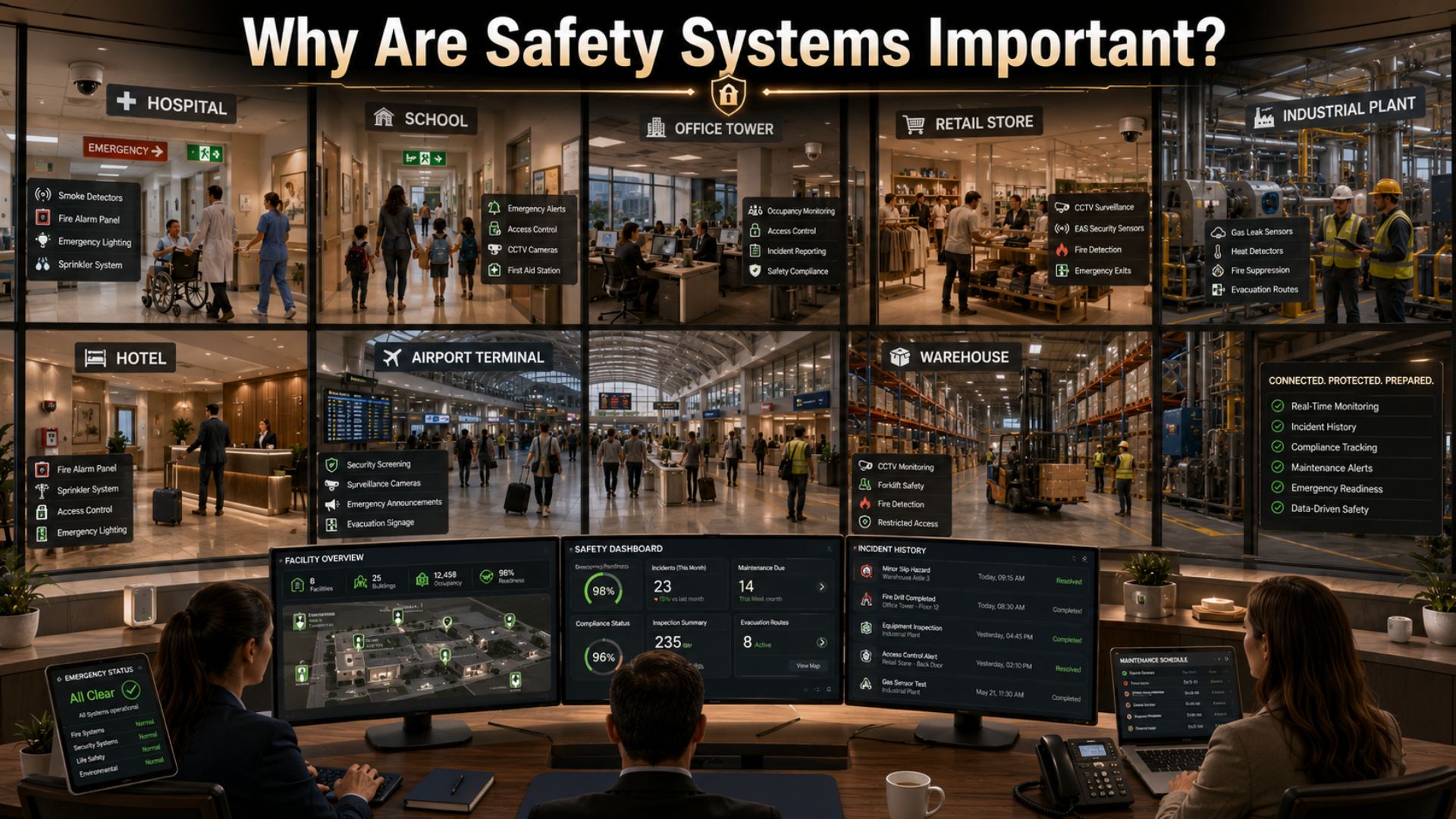
Organizations face a wide range of operational challenges every day. Equipment failures, unauthorized access, environmental hazards, and unexpected emergencies can affect both productivity and employee well-being.Modern protection strategies help organizations:
- Detect incidents earlier
- Improve emergency coordination
- Protect valuable assets
- Reduce operational downtime
- Strengthen workplace confidence
- Support regulatory compliance
Rather than reacting after an incident occurs, businesses can identify warning signs sooner and take preventive action.
How Do Intelligent Monitoring Solutions Improve Protection?
Technology now plays a central role in maintaining safer environments.Important capabilities include:
Continuous Monitoring
Sensors and connected devices operate around the clock, providing uninterrupted visibility across important business locations.
Automated Notifications
When abnormal activity is detected, responsible personnel receive immediate alerts through connected platforms.
Event Verification
Managers can review alerts before deciding on the most appropriate response.
Centralized Oversight
Multiple facilities can be monitored from one management interface, improving operational coordination.Integrating live security cameras further strengthens visibility by allowing security personnel to verify alerts, observe developing situations in real time, and improve decision-making during critical events.
Which Features Should Organizations Prioritize?
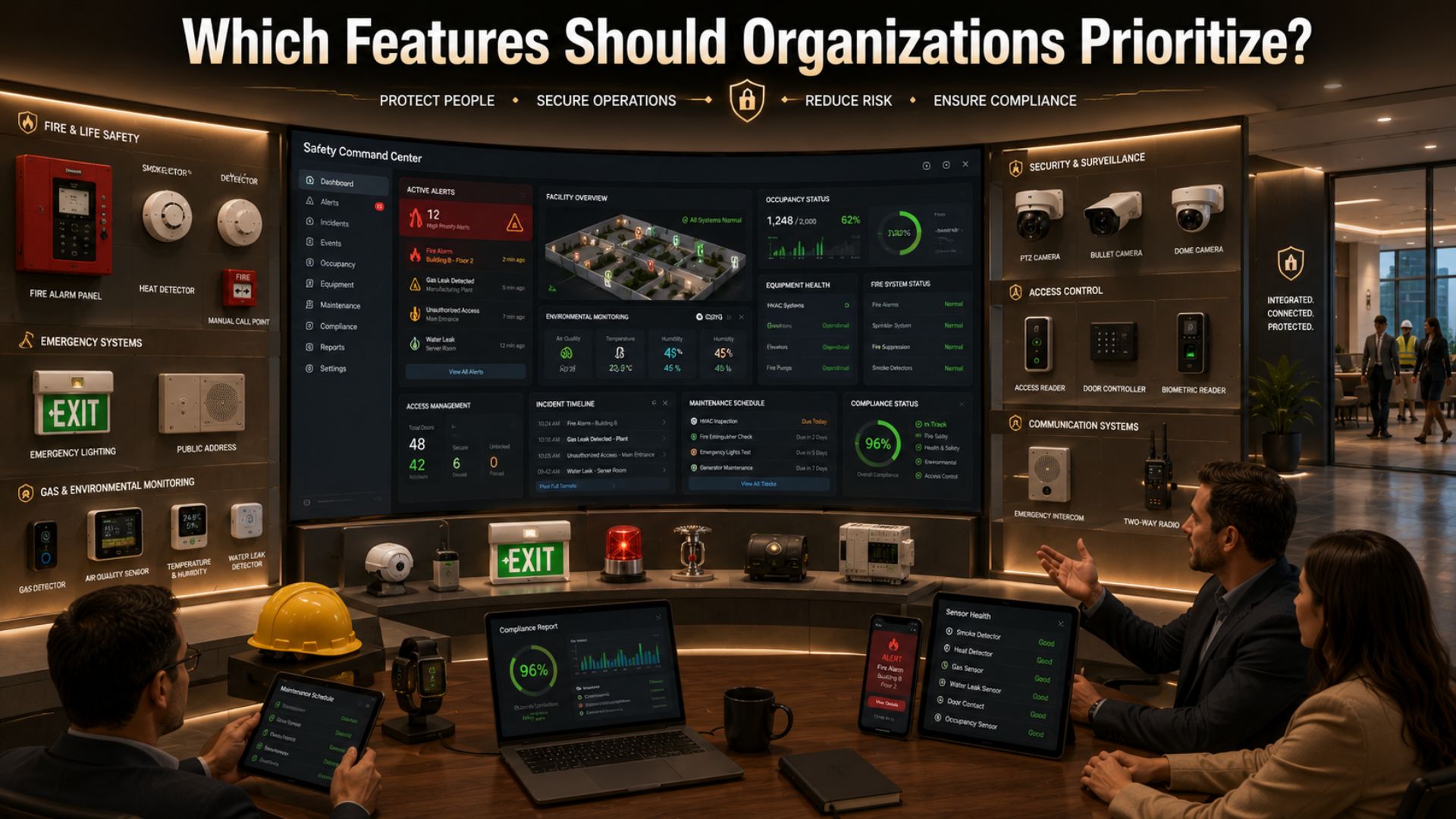
Selecting the right solution depends on operational requirements, facility size, and industry regulations.Consider features such as:
Real-Time Alerts
Instant notifications improve response times during emergencies.
Remote Management
Authorized personnel can monitor facilities from virtually any location.
Intelligent Detection
Smart analytics reduce unnecessary alerts while identifying meaningful events.
Flexible Integration
Systems should connect easily with existing security and operational technologies.
Scalable Architecture
Organizations can expand protection as facilities or operational needs grow.
Reliable Data Recording
Accurate event logs simplify investigations and improve accountability.
How Do Safety Solutions Improve Daily Operations?
Beyond emergency response, modern technologies contribute to smoother business operations.Benefits include:
- Better operational awareness
- Improved staff coordination
- Faster incident reporting
- Enhanced visitor management
- Greater facility visibility
- More efficient resource allocation
These advantages support both security objectives and overall organizational efficiency.
Why Is Ongoing Evaluation Important?
Business environments constantly change due to expansion, new technologies, changing regulations, and evolving operational requirements.Conducting a comprehensive security risk assessment helps organizations identify vulnerabilities, evaluate existing safeguards, prioritize improvements, and ensure that protection measures remain aligned with current operational needs and emerging risks.Continuous evaluation also supports better investment decisions by focusing resources where they provide the greatest value.
How Can Businesses Build a Stronger Safety Strategy?
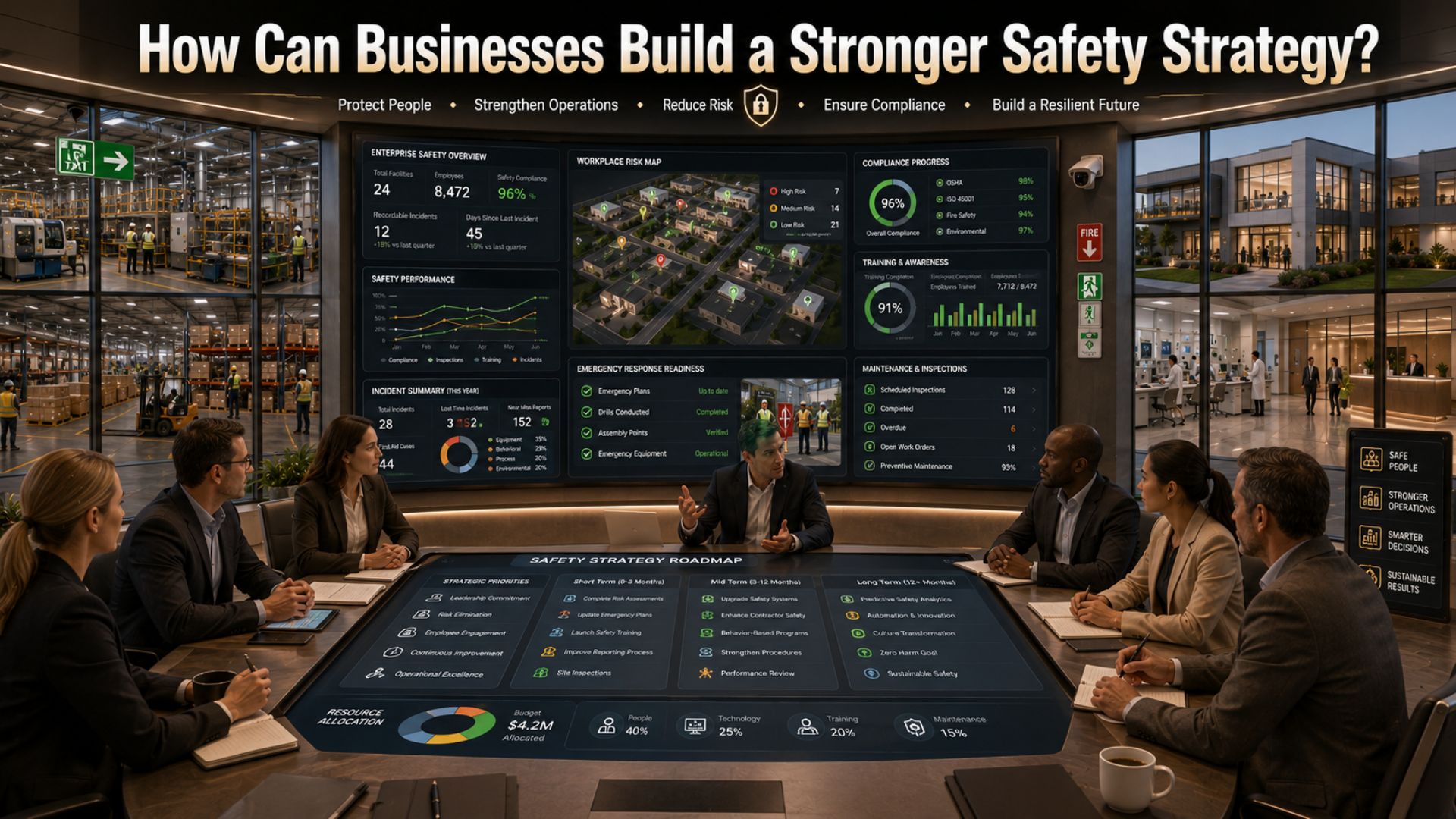
Technology is most effective when combined with thoughtful planning.Organizations should:
- Identify critical operational areas.
- Monitor high-risk locations continuously.
- Train employees on emergency procedures.
- Test equipment regularly.
- Review alert settings periodically.
- Update software and connected devices.
- Evaluate protection strategies as operations evolve.
Regular improvements help maintain long-term reliability.
Common Challenges Organizations Should Avoid
Even advanced technologies require proper implementation.Common mistakes include:
- Ignoring maintenance schedules
- Delaying software updates
- Overlooking employee training
- Poor device placement
- Excessive false alerts
- Failing to review security procedures
Addressing these issues helps maintain consistent system performance.
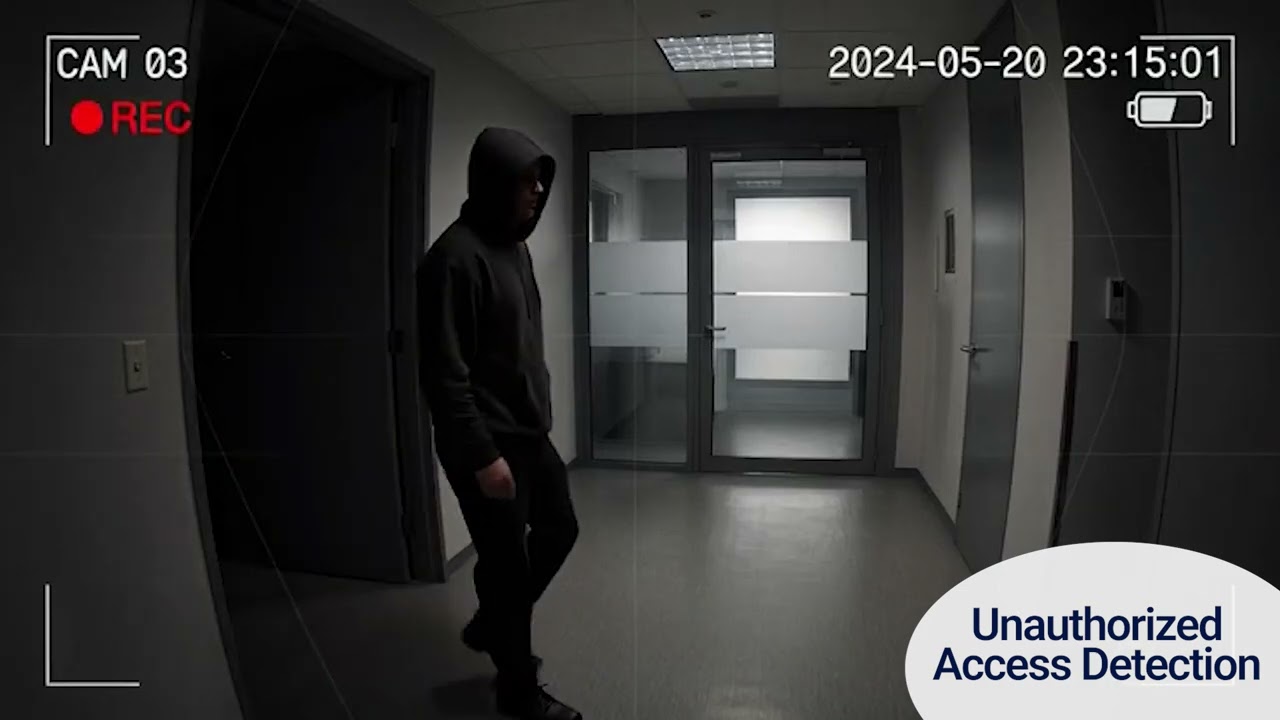
You can also watch: Instant Unauthorized Access Detection & AI Alerts | VideoraIQ
Summary
Modern safety systems help organizations detect hazards earlier, improve emergency response, strengthen operational awareness, and protect people and assets more effectively. By combining intelligent monitoring, proactive planning, and continuous evaluation, businesses can create safer workplaces while supporting productivity, compliance, and long-term operational resilience.
Frequently Asked Questions
What industries benefit from safety systems?
Manufacturing, healthcare, education, logistics, retail, hospitality, government, and commercial offices all benefit from intelligent monitoring and safety technologies.
Can safety systems integrate with existing infrastructure?
Yes. Many modern solutions integrate with surveillance, access control, alarms, sensors, and building management platforms.
How often should systems be tested?
Routine testing should follow manufacturer recommendations and organizational safety policies to ensure reliable operation.
Do safety systems support remote monitoring?
Most modern platforms provide secure remote monitoring through centralized management software and mobile applications.
